Brain Food Essentials: Sweet Potato
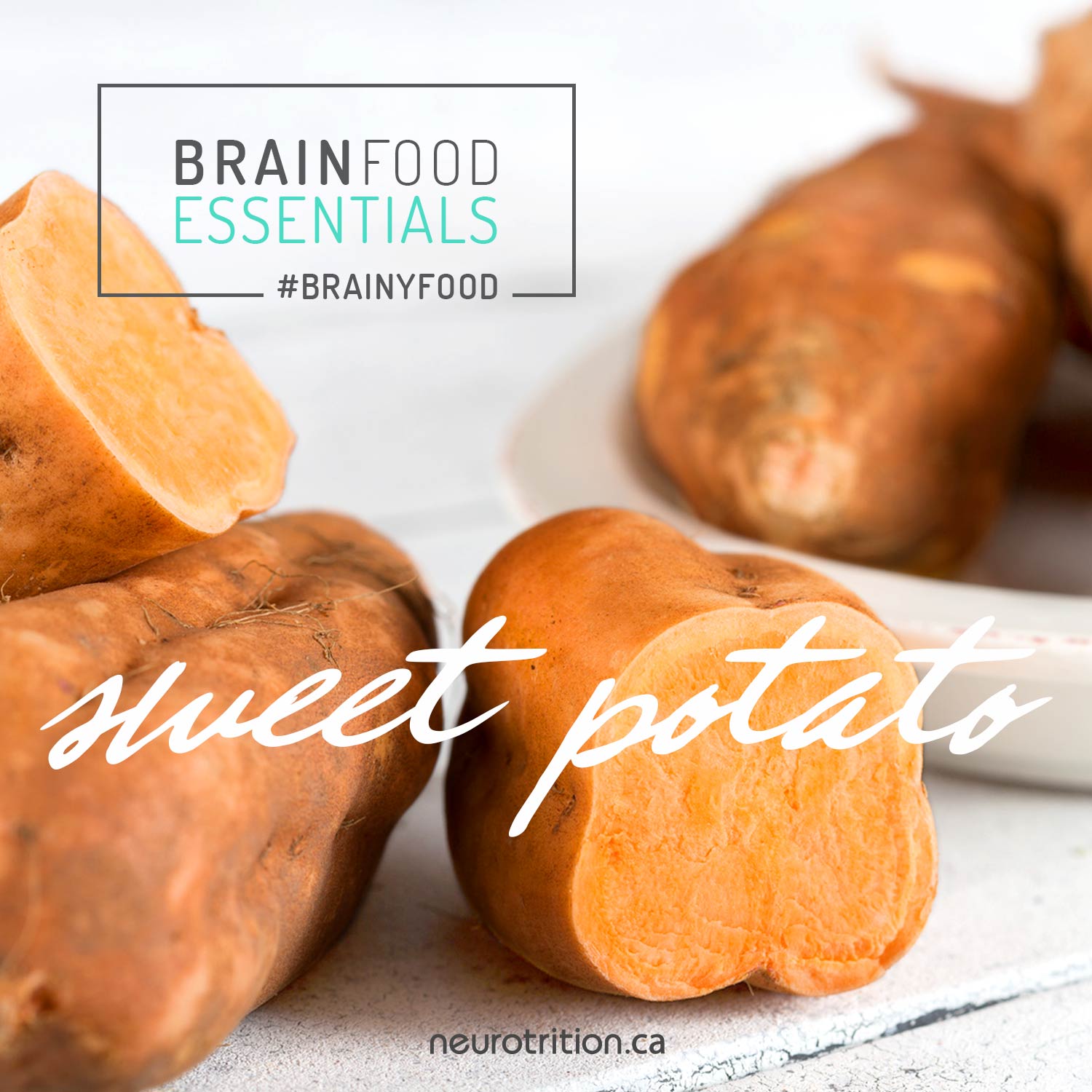
Sweet potatoes are often associated with fall and winter holidays like Thanksgiving and Christmas (but we say, go ahead and eat them all year around). If you haven't tried them, they are a delicious and sweet tasting root vegetable that brings a pop of colour to any meal. Orange is the most common colour, but you may be lucky and find white, pink or even purple ones. Not to mention that they're filling. And so darn sweet!
Sweet potatoes are not related to regular potatoes, however they both originated in Central and South America. They're a tuber (root) because, like regular potatoes, they grow underground. They're nutritious too as they contain a host of vitamins, antioxidants, as well as healthy carbohydrates!
So, let's go over a few of the essential nutrients of the sweet potato and show you how they can support your brain and eyes, and how this vegetable is a real Brain Food Essential.
CARBOHYDRATES
Sweet potatoes contain carbohydrates in the forms of sugars, starches, as well as fibre. We know, we know, there is a lot of hate out there for carbs. But we’re here to tell you that all carbs are not created equal. Your body and brain NEED carbohydrates to thrive. It’s the TYPE of carbs that matter.
Your body and brain NEED carbohydrates to thrive. It’s the TYPE of carbs that matter.
Sugar is your brain's main energy source. But we’re not talking about “added” sugars (like in processed, pre-packaged, ready-to-eat “foods”) – those are NOT good for your brain. This is the beauty of a whole food like sweet potatoes. You see, the sugar it contains is naturally combined with the rest of the goodness from the vegetable. It's not “added”. The vitamins, minerals, fibre and a special little compound (more on this below) in sweet potatoes help that natural sugar digest and release into your blood stream slowly, for better blood sugar balance. Whole foods are pretty smart that way!
Sweet potatoes contain fibre, mostly insoluble fibre. These insoluble fibres are known to reduce the risk of diabetes, improve gut health and help you manage your weight—all of which are good for your noggin.
So, if you ever have a sugar craving – try satisfying it with some sweet potato!
ANTIOXIDANT VITAMINS BETA-CAROTENE (PRE-VITAMIN A) & VITAMIN C
Antioxidants are known to help reduce inflammation – that's one reason why they're so good for your brain and your body. Vitamins A and C are both antioxidant vitamins. While regular potatoes also contain vitamin C, sweet potatoes (particularly the orange ones) contain both vitamin C and pre-vitamin A. The pre-vitamin A (a.k.a. beta-carotene) is transformed into vitamin A by our bodies, and is essential for optimal eye nutrition (vitamin A isn't called “retinol” for nothing!).
Having your sweet potatoes with some healthy fat (like coconut oil or coconut butter) will help you absorb even more of its vitamin A.
An important point about vitamin A is that it's a fat-soluble vitamin. This means having your sweet potatoes with some healthy fat (like coconut oil or coconut butter) will help you absorb even more of its vitamin A.
Fun Fact: The colour extracted from the sweet potato is quite stable, and at least one researcher has considered it to be a “promising and healthier alternative to synthetic colouring agents in food systems.”
OTHER ANTIOXIDANTS
In addition to antioxidant vitamins, sweet potatoes contain other phytochemical (phyto = plant) antioxidants. In fact, the darker the tuber (think: purple), the richer these antioxidants. The compounds of particular interest are in a group called anthocyanins, and 16 of them have already been detected in this root vegetable.
While we don't know yet if there is a direct link to improved brain function in humans by eating sweet potatoes, there have been several studies that show cognitive benefit from the antioxidant and anti-inflammatory effects of sweet potato extracts fed to rodents.
SWEET ON CAIAPO
Sweet potatoes have even more super powers when it comes to your blood sugar. Let’s get science-y for a second. A particular sweet potato extract known as “caiapo” has been termed a “natural insulin sensitizer” because it seems to help improve blood sugar regulation. Natural blood sugar regulation?!?… we’re listening!
A particular sweet potato extract known as “caiapo” has been termed a “natural insulin sensitizer” because it seems to help improve blood sugar regulation.
Clinical research has shown increased insulin sensitivity (this means you need LESS insulin to lower blood glucose, which is a GOOD thing) when caiapo was given to people with type 2 diabetes, every day for 5 months. Caiapo was also reported to increase levels of adiponectin (a hormone produced by our fat cells that plays an important role in insulin metabolism). This connection could explain exactly why sweet potatoes are so good for your blood sugar. And not to get all broken record here (because we say this all the time!) but stable blood sugar is crucial for brain and mental health. So we believe foods that help balance blood sugar ARE ALSO brain loving foods!
5 EASY WAYS TO GET MORE SWEET POTATO INTO YOUR LIFE
Sweet potatoes can be cooked the same way you would regular potatoes. Even though they have a fairly high carbohydrate content, their glycemic index (how much your blood sugar rises after eating them), is considered to be “moderate.” Interestingly, when they’re steamed they don't spike your blood sugar quite as much, as roasting and frying does. And, the glycemic index of sweet potatoes is smaller than that of regular potatoes, so that's another reason to go for the “sweet” ones. Please remember: leave the skins on whenever possible, with all the cooking methods below, to get the best nutrient kick.
1. Roasted/Slow Cooked
You can add cubed sweet potatoes right into your roasting pan or slow cooker when you're preparing dinner.
2. Fried
If you cube your sweet potatoes and boil them slightly (so they're still firm), you can then throw them into a frying pan and lightly fry them on medium heat with some healthy cooking oil (e.g. coconut oil).
3. Baked
This is a simple way to create a side dish for your meal. Try slicing the sweet potatoes into thin “coins” or lengthwise into thin “fries”. Then drizzle with melted coconut oil, season with a bit of sea salt and bake them until they're brown, about 10 minutes. Then flip them over and do another 5-10 minutes until they're done.
4. Salads
Try throwing cubed roasted, baked or fried sweet potatoes on top of your greens; perhaps along with dried cranberries, pumpkin seeds and your favourite healthy dressing.
5. Mashed
If you're used to mashed potatoes, why not mix it up a bit? Try mashing sweet potatoes instead. Or even mixing the two together. Peel, chop and boil them as you would regular potatoes, then drain the water and mash them up as you normally do.
So, you’re going to go stock up on sweet potatoes now, right? We say YES! Your noggin may thank you.